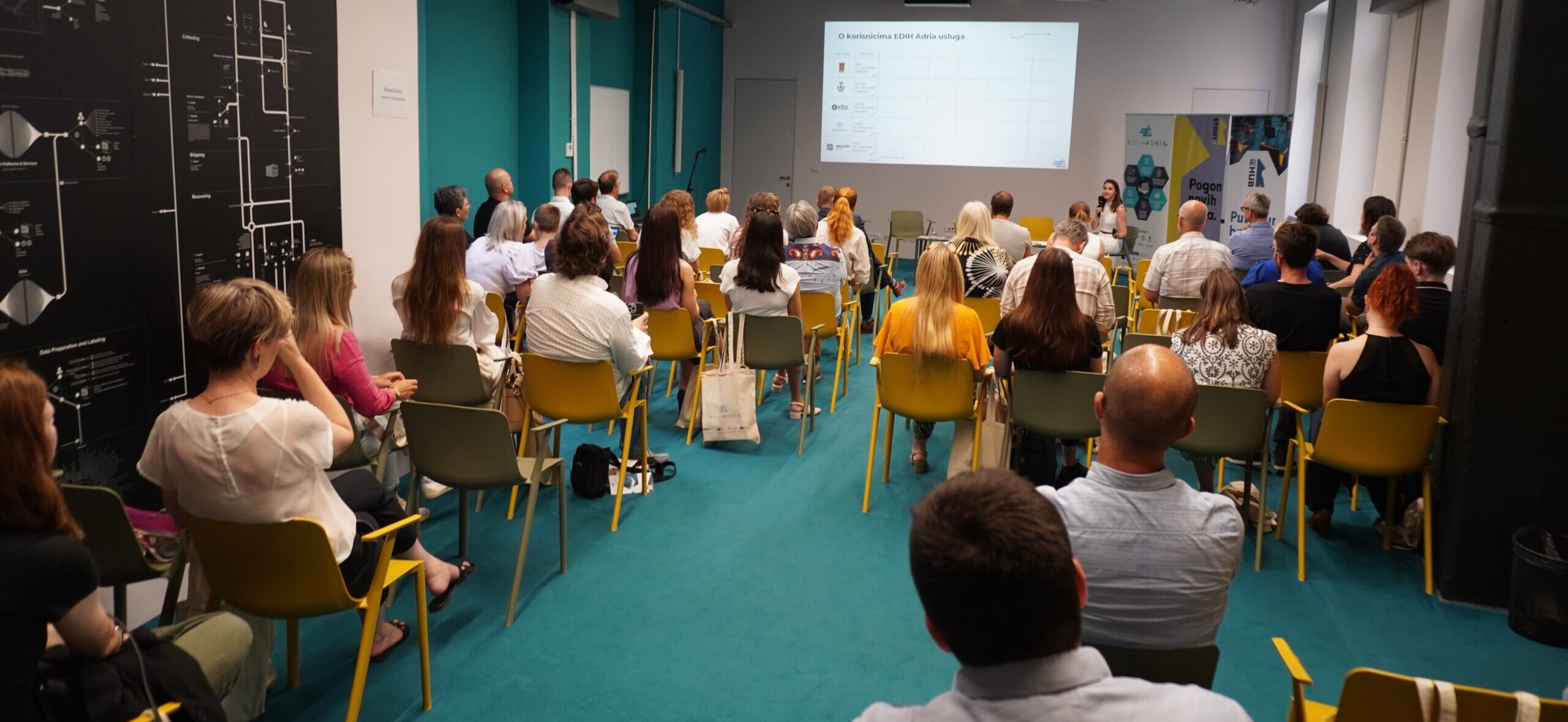
EDIH Adria Meetup 2025, held in Rijeka on June 17, gathered more than 50 participants from the public and private sectors, science and industry, to discuss in an open atmosphere the key topics of digital transformation, the future of artificial intelligence and the challenges that shape our digital everyday life.
Finalisation of the project – looking ahead
EDIH Adria is entering the last six months of its first phase of implementation and the future is already actively planned — an application for continuation of the project in the next programming period has been submitted and the results are expected soon.
An introductory presentation was given by Damir Medved, Director of EDIH Adria, which in its review highlighted concrete indicators of the impact and reach of the project. He particularly emphasized that EDIH Adria, according to data from the European Commission, currently ranks 4th in Europe in terms of the total number of services provided among all European Digital Innovation Hubs (EDIHs).
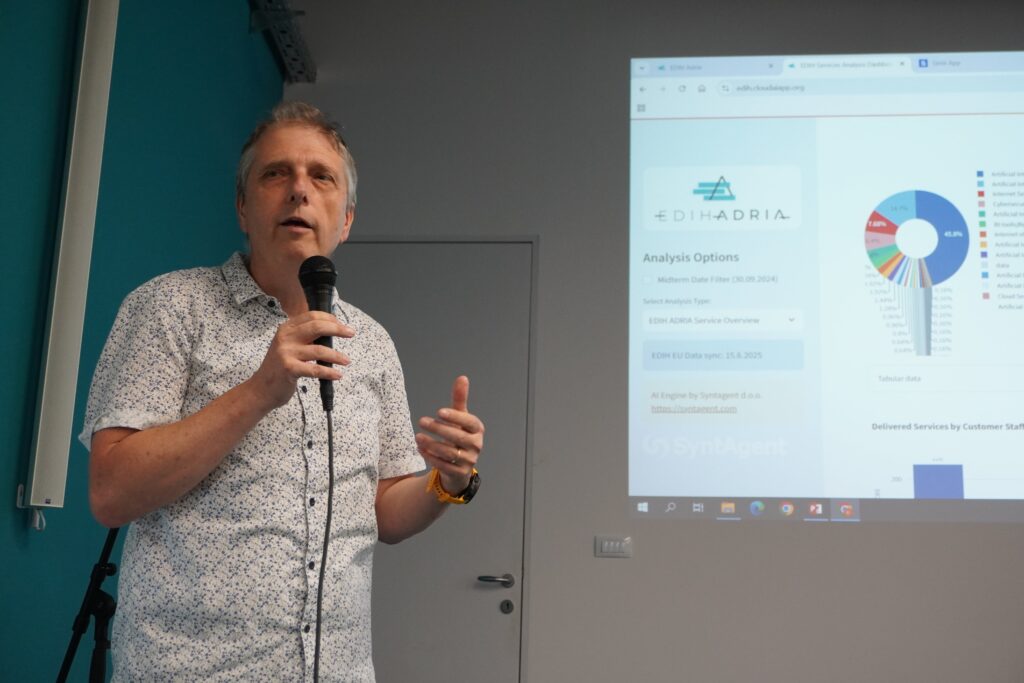
This data not only confirms the high level of activity and success of the Croatian EDIH, but also provides a solid basis for optimism ahead of the announcement of the results for the continuation. The focus remains on supporting SMEs, the public sector and institutions in developing and implementing advanced digital solutions.
Case studies show a clear direction
The introductory part of the programme included the presentation of practical examples – concrete digital pilot projects developed through cooperation with the EDIH Adria team. Professor Mieta Bobanović Dasko presented case studies from the health sector, protected area management and regional development, and then in conversation with users she opened questions of sustainability, user experience and readiness for implementation.
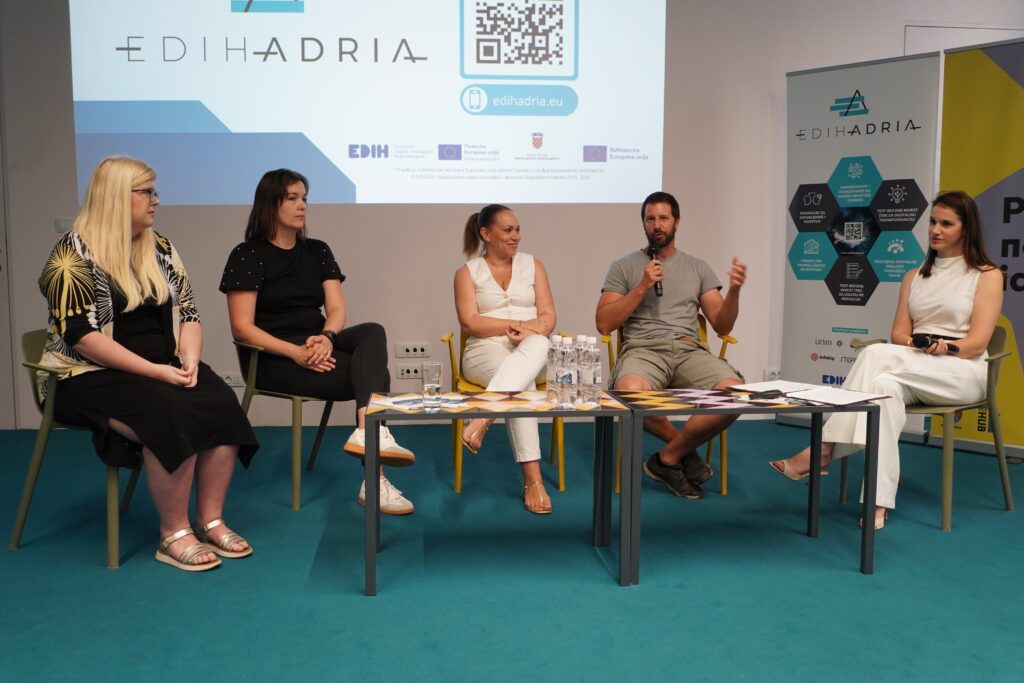
Users such as the Istrian Development Agency, Brijuni National Park and the Health Center of PGC pointed out that cooperation with EDIH Adria was useful not only for technology, but also for support in the reflection process and management model. Most of the attendees emphasized that they plan to proceed with the implementation of the tested solutions.
Quizs, questions and laughter – but also a serious topic of AI regulation
One of the highlights of the event was Keynote lecture by Stefan Martinić, lawyer specialising in European Union law and artificial intelligence, and member of the national AI legislation working group. Instead of a classic lecture, Stefan included the audience in an original and interactive way – through a series of short quizzes, simulations and assignments, participants actively reflected on the implications of the upcoming Regulation (EU) 2024/1689 on Artificial Intelligence (AI Act).
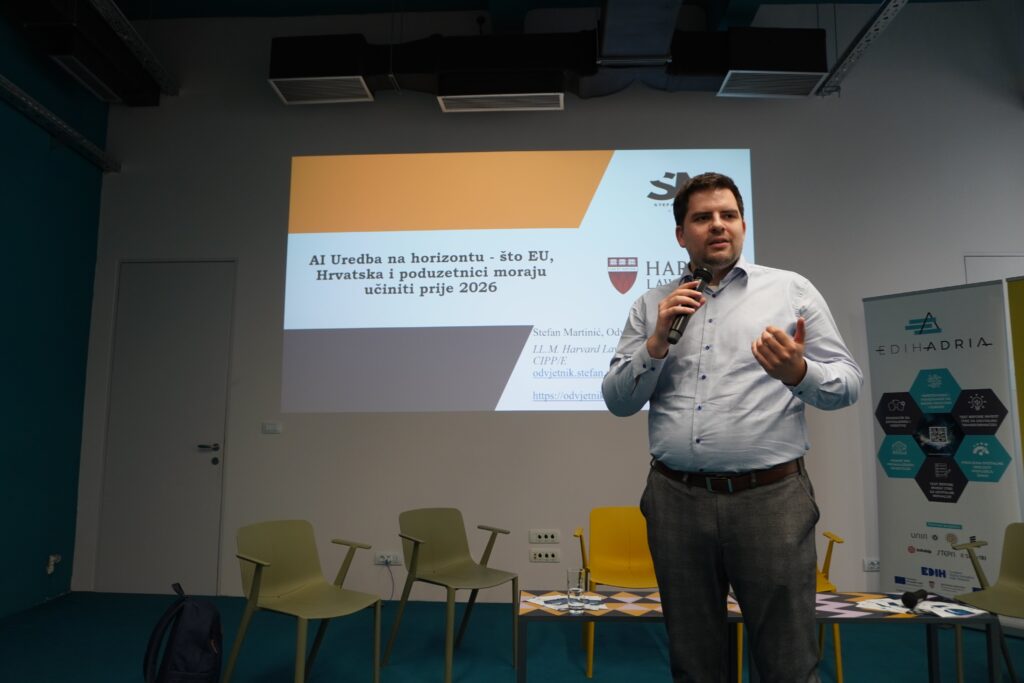
With a dose of humor and concrete examples, the lecture opened up space for serious questions: How to identify benefits and risks in the application of AI systems? What does it mean when a system is classified as “high risk”? Who is covered by the new rules?
Participants worked in groups, analysed realistic AI application scenarios across different sectors and tried to identify which risk category these systems would fall into – and what this would mean in practice.
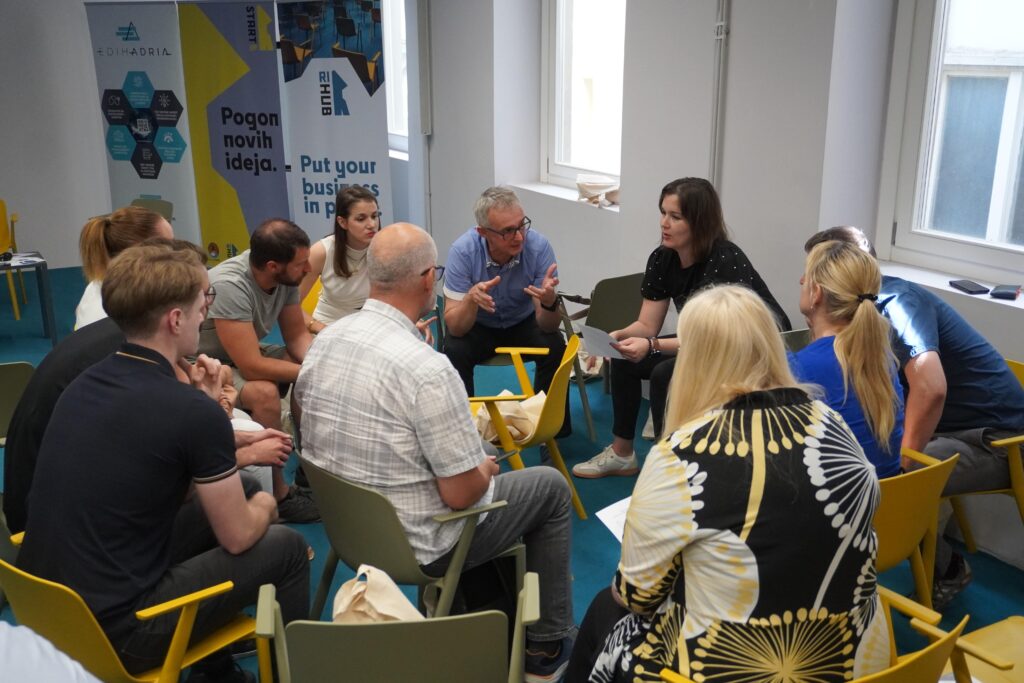
The room was full – not only of people, but also of questions. From technical dilemmas around model classification, to reputational challenges, legal accountability and institutional preparation. The discussion continued beyond the formal part, which is a clear indication that the topic is not only topical, but also crucial for all those involved in the digital transformation, regardless of the sector.
The message was clear: AI Regulation is not a threat to development, but an opportunity to create trust, accountability and market advantage – if taken seriously in time.
Panel on Digital Reality – Between Opportunities and Barriers
Panel discussion: “The future of digital transformation in the region” She may have opened the most direct conversation of the day. Panellists touched on the key neuralgic points of the digital transition: the growing demand for digitalisation, as opposed to the lack of companies able to deliver advanced digital services; the decline in the interest of young people to enter entrepreneurship; and obstacles in cooperation with the public sector, in particular due to an unadjusted and demotivating public procurement process.
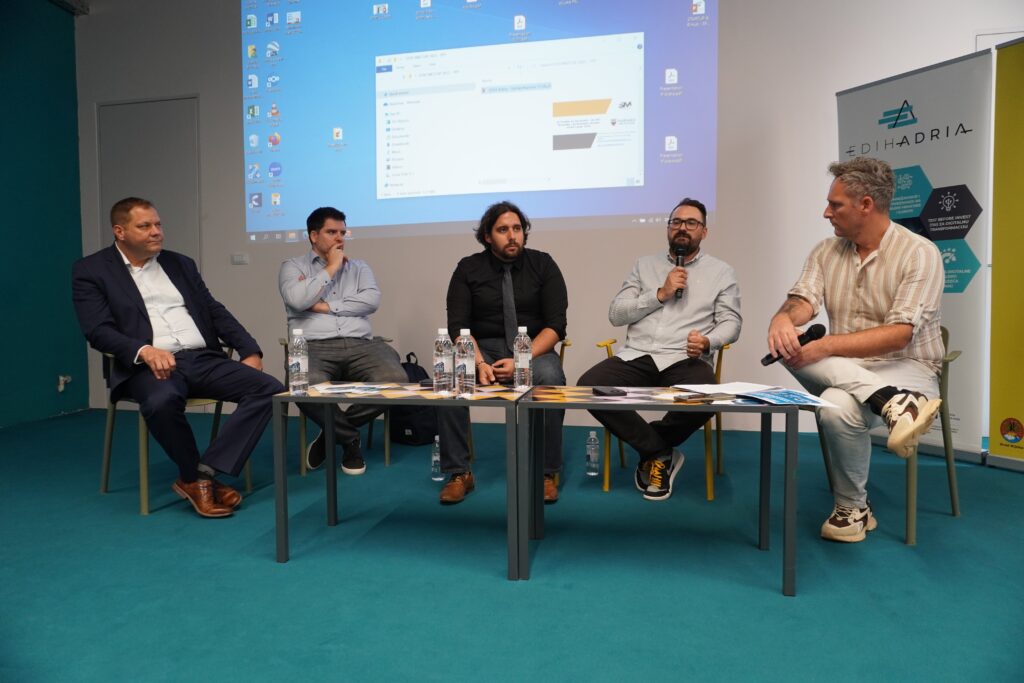
The discussion did not remain at the level of problems – the panellists also highlighted possible lines of action, the need for more flexible partnership models and the introduction of specialised digital “translators” between technology, law and end-users.
A conclusion? Digital transformation is happening – but it's looking for people, not just tools
EDIH Adria Meetup 2025 has once again confirmed that technologies are just a tool – a key difference happens when people know how to use, develop and connect them.
We thank all speakers, users, panelists and participants who shared their challenges, experiences and ideas. We are working further – because the digital future is not waiting, and the best way to approach it is to: together.